Unveiling the Complexities of Style and Production at a Metal Foundry
The style and manufacturing procedures at a metal foundry entail a collection of intricate steps. Each phase, from picking basic materials to melting and casting, plays a critical role in the end product. Aluminum Foundry. Accuracy and quality assurance are paramount in this market. As innovation developments, new technologies are arising. These developments may redefine traditional methods. What implications do these modifications hold for the future of metal shops?
The Melting Process: Transforming Raw Materials Into Fluid Metal
The melting process works as the vital initial step in changing raw products right into liquid metal, a treatment crucial for foundry procedures. This phase begins with the cautious choice of metals, which might include light weight aluminum, copper, or iron, depending upon the desired final product. Each product is assessed for purity and structure to ensure excellent melting conditions.
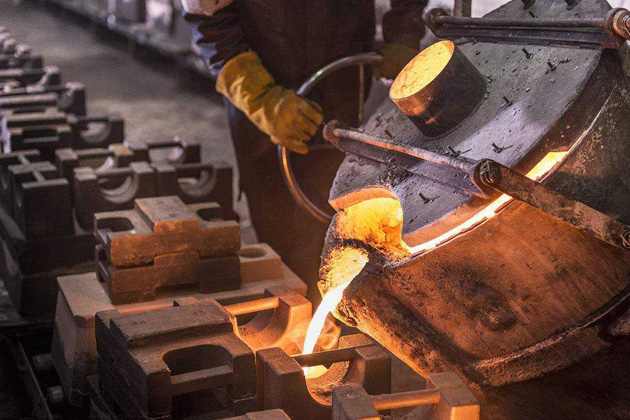
As the metals reach their melting point, they transform from strong to liquid, permitting additional improvement. This procedure can likewise include the elimination of pollutants with slag formation, ensuring the high quality of the liquid steel. Ultimately, the effective conclusion of the melting procedure lays the foundation for succeeding metalworking procedures.
Molding Strategies: Forming Metal With Precision
Following the melting procedure, the following phase in metal foundry operations entails molding techniques that shape the liquid metal right into wanted forms. Numerous approaches are utilized, each selected based upon the details requirements of the job. Sand spreading, among the most usual techniques, uses a combination of sand and binder to create mold and mildews that can be conveniently formed and reused. An additional method, financial investment casting, involves producing a wax pattern that is covered in a ceramic covering, enabling complex designs and high accuracy.
Die spreading, on the other hand, utilizes high-pressure to infuse molten steel into steel mold and mildews, resulting in durable and consistent products. In addition, the selection of molding strategy affects the cooling price, surface finish, and dimensional accuracy of the end product. Understanding these techniques is necessary for maximizing style and guaranteeing the effective manufacturing of steel components tailored to certain applications.
Casting Methods: From Model to Manufacturing
Countless spreading methods are used in steel factories to move from prototype growth to full-blown manufacturing. Amongst these approaches, sand spreading stands out for its adaptability and cost-effectiveness, making it excellent for both huge and small production runs. Investment spreading, recognized for its precision, is typically used for intricate geometries, enabling for fine details in the end product. Die casting, appropriate for high-volume production, makes use of liquified metal injected into molds, providing superb surface coating and dimensional precision.

Quality Assurance: Ensuring Excellence in Every Pour
While the spreading process can differ significantly in between methods, keeping strenuous quality assurance is vital to establish that every put meets the called for criteria. Quality assurance in a metal foundry incorporates a series of methodical checks and assessments made to identify flaws early in the production process. This consists of thorough inspections of resources, monitoring of melting temperatures, and analyses of mold honesty.
Foundry personnel utilize different testing strategies, such as non-destructive screening and dimensional confirmation, to identify that castings accomplish preferred specs. In addition, adherence to established market standards and certifications improves the dependability of the end product.
Responses loopholes are likewise crucial; any type of inconsistencies kept in More hints mind throughout high quality assessments are evaluated to fine-tune processes and mitigate future errors. Inevitably, a culture of quality control cultivates not only customer satisfaction however also a track record for excellence in the competitive landscape of metal manufacturing.
Developments and Technologies: The Future of Metal Foundries
The landscape of steel factories is swiftly evolving, driven by developments in technology and ingenious methods. Automation and robotics are changing standard workflows, improving effectiveness and accuracy throughout manufacturing. Automated pouring systems and robot arms lower human mistake, resulting in better outcomes. Additionally, the assimilation of synthetic knowledge is allowing anticipating maintenance, maximizing equipment performance, and reducing downtime.
Additive manufacturing is emerging as a game-changer, enabling rapid prototyping and the creation of complicated geometries that were formerly unattainable. This technology facilitates the customization of metal parts, dealing with details customer requirements without substantial dead time.
Sustainability is also a crucial emphasis, with shops taking on greener techniques, such as recycling scrap steel and making use of energy-efficient heating systems. These developments not only boost efficiency however also straighten with worldwide initiatives in the direction of ecologically liable manufacturing, making certain the future of steel shops remains durable and competitive in an altering commercial landscape.
Often Asked Concerns
What Kinds of Metals Are Typically Made Use Of in Foundries?
Common steels utilized in factories consist of light weight aluminum, cast iron, brass, bronze, and steel (Aluminum Casting). Each steel has special residential or commercial properties, making them ideal for numerous applications in markets such as vehicle, aerospace, and building and construction, among others
How Do Factories Handle Waste and Environmental Influence?
Factories find more handle waste and ecological impact by applying recycling programs, making use of advanced filtration systems, and sticking to rigorous governing requirements. They often purchase lasting modern technologies to lower emissions and promote liable source usage throughout their procedures.
What Precaution Remain In Location for Employees?
Shops execute various precaution for workers, consisting of individual protective tools, proper ventilation systems, routine safety and security training, emergency situation response procedures, and stringent adherence to job-related wellness laws to lessen risks linked with hazardous products and tools.
How much time Does the Whole Production Process Typically Take?
The entire manufacturing procedure commonly takes several weeks, depending on the complexity of the design and the products utilized. Variables such as mold preparation, melting, and cooling time considerably affect the overall period of manufacturing.
What Are the Key Tests Faced by Metal Factories Today?
Metal foundries today face obstacles such as increasing material expenses, varying need, environmental regulations, experienced labor scarcities, and maintaining quality assurance. These concerns make complex manufacturing effectiveness and earnings in a progressively open market.
The design and manufacturing processes at a metal foundry include a collection of complex actions. The melting process offers as the important initial step in changing raw materials right into fluid metal, a treatment vital for foundry operations. Complying with the melting process, the following phase in steel foundry operations includes molding strategies that form the liquid metal right into desired kinds. Various spreading methods are used go to website in steel factories to move from prototype growth to major manufacturing. Quality control in a metal foundry includes a collection of organized checks and assessments made to determine flaws early in the manufacturing procedure.